
Fresh Walleye: What Does “Fresh” Really Mean?
The Truth About Fresh Fish, Flash Freezing & Michigan Restaurants
When you order fresh walleye at a Michigan restaurant, what exactly does “fresh” mean?
Was the fish caught locally in the Great Lakes? Was it delivered directly from a fishing boat? Or could it have been caught in Canadian waters, frozen shortly after harvesting, and transported hundreds of miles before reaching your plate?
The answers may surprise you.
In this Great Lakes Explained documentary, we explore the difference between fresh and previously frozen walleye, how flash freezing can preserve seafood quality, what Michigan food laws say about misleading descriptions, and the questions you can ask before ordering.
The goal isn't to discourage anyone from enjoying walleye. It's to help you understand what you're actually buying.
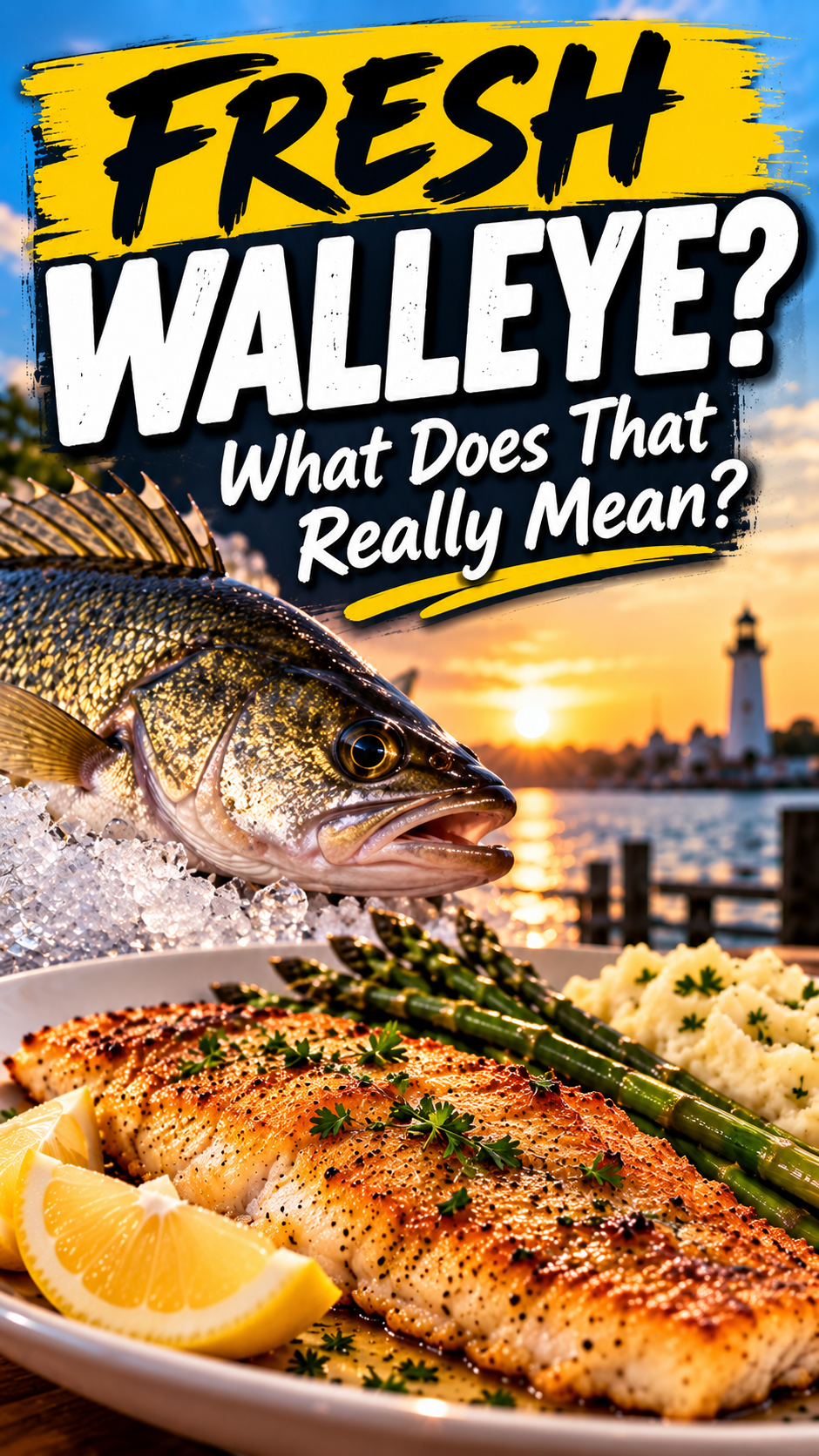
Fresh Walleye: What Does “Fresh” Really Mean? — A Great Lakes Explained documentary exploring fresh versus previously frozen walleye, flash freezing, and Michigan restaurant food descriptions.
What Does “Fresh Walleye” Actually Mean?
Fresh vs. Previously Frozen Walleye
When a Michigan restaurant advertises fresh walleye, what does that actually tell you? It doesn't necessarily mean the fish was caught locally, delivered that morning, or never frozen.
Walleye may reach restaurants through different supply chains, including commercial fisheries and seafood distributors. Some fish is sold refrigerated, while other fish is frozen shortly after harvest to preserve quality during storage and transportation.
The important distinction is that freshness, geographic origin, and whether a fish has been frozen are three different questions. Understanding those differences helps you make a more informed choice when ordering.
How Flash Freezing Affects Walleye Quality
Flash freezing is a process that rapidly lowers the temperature of fish shortly after processing. When done properly, it helps preserve seafood quality by slowing deterioration and limiting the formation of large ice crystals that can damage texture.
Properly frozen and thawed walleye can still have excellent flavor and texture. However, freezing does not automatically guarantee better quality. Handling, storage temperature, packaging, and thawing methods all matter.
This is why a carefully handled, previously frozen walleye fillet may be a better choice than an unfrozen fillet that has spent too long in refrigerated storage.
Where Does Michigan Restaurant Walleye Come From?
Michigan restaurants may purchase walleye from seafood distributors that source fish from different regions, including Canadian commercial fisheries. Canada has an established commercial walleye industry, particularly around the Great Lakes.
That means a walleye dinner served in Michigan isn't necessarily made from fish caught in Michigan waters. The fish could have been harvested in Canada, processed, refrigerated or frozen, and transported through a distributor before reaching the restaurant.
None of this automatically makes the fish inferior. Canadian walleye can be excellent. The important question is whether the restaurant accurately represents the fish's origin and handling when describing it to customers.
What Does Michigan Law Say About Fresh Fish?
Michigan's Food Law prohibits food from being misbranded or presented with false or misleading labeling. The law also addresses misleading food advertising.
This matters when restaurants describe seafood using terms such as "fresh," "locally caught," or "never frozen." Those descriptions can communicate different things to customers, and restaurants should be able to support factual claims about their seafood.
However, Michigan's general food-labeling and advertising provisions do not automatically establish that every restaurant must identify previously frozen walleye on its menu. Whether a particular description is misleading depends on the facts and applicable requirements.
The takeaway: don't assume that "fresh walleye" means Michigan-caught or never frozen. Ask the restaurant directly if those details matter to you.
5 Questions to Ask Before Ordering Walleye
You don't need to be a seafood expert to make an informed choice. The next time you order walleye at a Michigan restaurant, consider asking:
1. Where was the walleye caught? Was it harvested in Michigan, Canada, or somewhere else?
2. Has the fish ever been frozen? Previously frozen fish can still be excellent, but it's useful to know.
3. Is it wild-caught or farm-raised? Ask the restaurant about its source.
4. When was it delivered? Delivery date doesn't necessarily tell you when it was harvested.
5. How is it prepared? Breading, seasoning, and cooking methods can affect the final quality as much as the fish itself.
A knowledgeable restaurant should be willing to help you understand what you're ordering, even if the server needs to check with the kitchen or supplier.
The Bottom Line: Fresh Doesn't Always Mean Better
The word “fresh” sounds appealing, especially when you're ordering walleye near the Great Lakes. But freshness, geographic origin, and whether a fish has been frozen are separate considerations.
Properly handled, previously frozen walleye can deliver excellent flavor and texture. Likewise, a fish that has never been frozen isn't automatically superior.
The best approach is to ask questions, understand where your seafood comes from, and choose restaurants that are transparent about their ingredients.
The takeaway: Great walleye isn't just about whether it was frozen. It's about sourcing, handling, storage, and preparation.
Sources & Further Reading
This Great Lakes Explained documentary draws on food safety guidance and Michigan food laws to explore how seafood is described, handled, and sold.
Michigan Food Law — MCL 289.5101
Michigan's statutory provisions addressing adulterated and misbranded food.
Michigan Food Law — MCL 289.5103
Michigan's statutory provisions addressing false or misleading food advertising.
U.S. Food & Drug Administration (FDA)
Selecting and Serving Fresh and Frozen Seafood Safely — Consumer guidance on purchasing, storing, and preparing seafood.
About the Visuals
Some visuals in this documentary are AI-generated illustrations used to help explain the subject. They are not presented as actual footage of specific fishing operations, restaurants, or seafood suppliers.